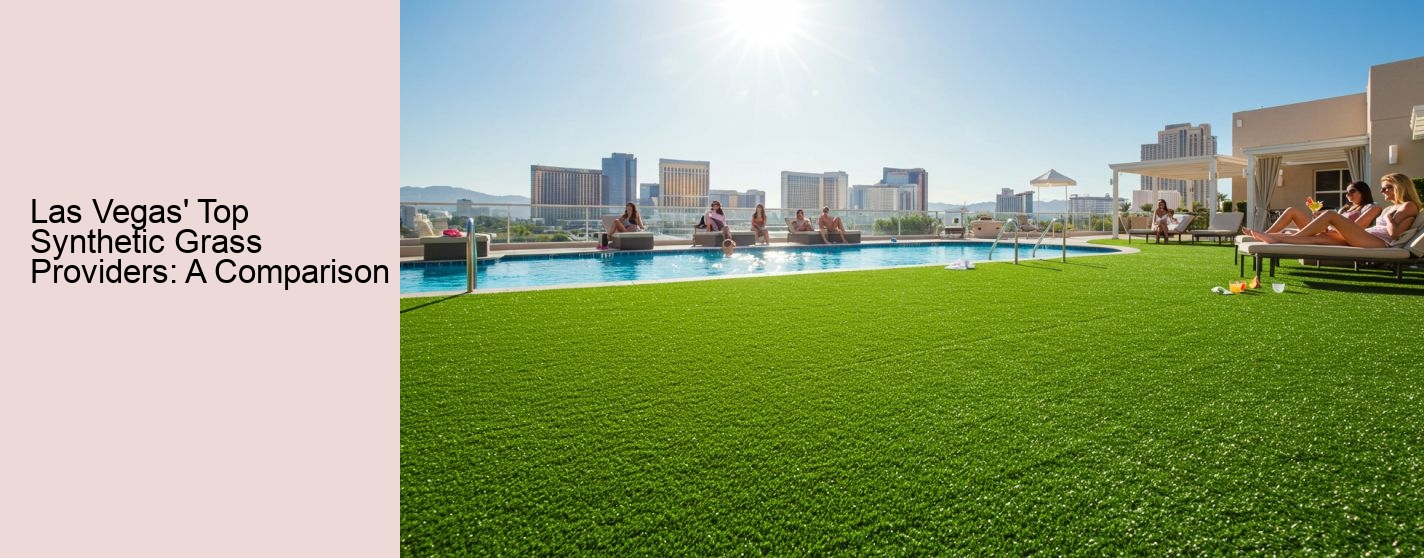
Las Vegas' Top Synthetic Grass Providers: A Comparison

Las Vegas' Top Synthetic Grass Providers: A Comparison

artificial turf rooftops Henderson

Decreased Maintenance with Synthetic Grass


Synthetic grass has actually been obtaining popularity among property owners in Las Las vega for its countless advantages. Synthetic Grass in Las Vegas: A Buyer's Guide . Among one of the most substantial advantages is the minimized maintenance demand, that makes artificial turf an easier and cost-effective option contrasted to natural lawn.


Maintaining a natural turf lawn is commonly a lengthy and labor-intensive process. In the scorching heat of Las Las vega, it ends up being a lot more complex. The grass calls for normal watering, mowing, fertilizing, and weeding to stay healthy and visually pleasing. If overlooked, the grass starts to turn yellow or brown and may even die, which would certainly call for reseeding or perhaps complete substitute of the lawn.


On the other hand, artificial turf basically removes these problems. It remains flawlessly eco-friendly and lush throughout the year, regardless of the weather. There is no demand for routine watering, which not only conserves effort and time however also contributes to water preservation - a considerable worry in locations like Las Las vega. The only water need would certainly be occasional rinsing to maintain it tidy and dust-free.


In addition, with artificial turf, there is no need for mowing or fertilizing. It continues to be at the perfect elevation forever, and theres no danger of it overgrowing or harboring weeds.

Las Vegas' Top Synthetic Grass Providers: A Comparison - artificial turf rooftops Henderson

  1. pet friendly turf Las Vegas
  2. pet friendly turf Las Vegas
  3. pet friendly turf Las Vegas
  4. pet friendly turf Las Vegas
  5. pet friendly turf Las Vegas
This not just minimizes the time invested in yard maintenance however likewise eliminates the price of getting and preserving a lawnmower or buying fertilizers.


Artificial turf is likewise extra durable and hard-wearing than natural yard. It can endure hefty foot website traffic and extensive play activities without obtaining worn out or harmed. This indicates you wont need to bother with changing or fixing certain areas of your grass, which is one more typical maintenance job with natural yard.


The decreased maintenance demand with synthetic grass offers house owners in Las Las vega with more time to enjoy their outdoor rooms, rather than spending quality time keeping them. It also implies substantial price savings in the future. In a city like Las Vegas, where the climate is harsh, artificial turf verifies to be a clever and advantageous selection for property owners, using an evergreen, low-maintenance grass that looks and feels just like all-natural lawn.

Environmental Advantages of Changing to Artificial Turf


As Las Las vega continues to experience the influences of a transforming environment and enhancing water shortage, it is ending up being vital for homeowners and organizations to find cutting-edge means to preserve water. One such method is with the adoption of synthetic grass or artificial turf. This alternative not just uses visual charm and reduced upkeep however additionally carries substantial environmental benefits.


One of the most evident environmental benefits of switching to artificial turf is water preservation. Traditional lawn lawns require a hefty quantity of water to stay eco-friendly and healthy and balanced, particularly in the desert environment of Las Vegas. According to the Southern Nevada Water Authority, each square foot of all-natural turf replaced by synthetic grass conserves 55 gallons of water annually. As a result, by switching over to synthetic grass, Las Vegas homeowners can substantially reduce their water usage, which is essential in a city where water is a priceless resource.


Artificial turf also removes the demand for hazardous chemicals and fertilizers. The majority of natural grass require chemicals, plant foods, and herbicides to preserve their look and health and wellness. These compounds often seep right into the ground, polluting the groundwater and impacting the regional vegetation and animals detrimentally. With artificial turf, these chemicals are unnecessary, making it a safer option for the environment.
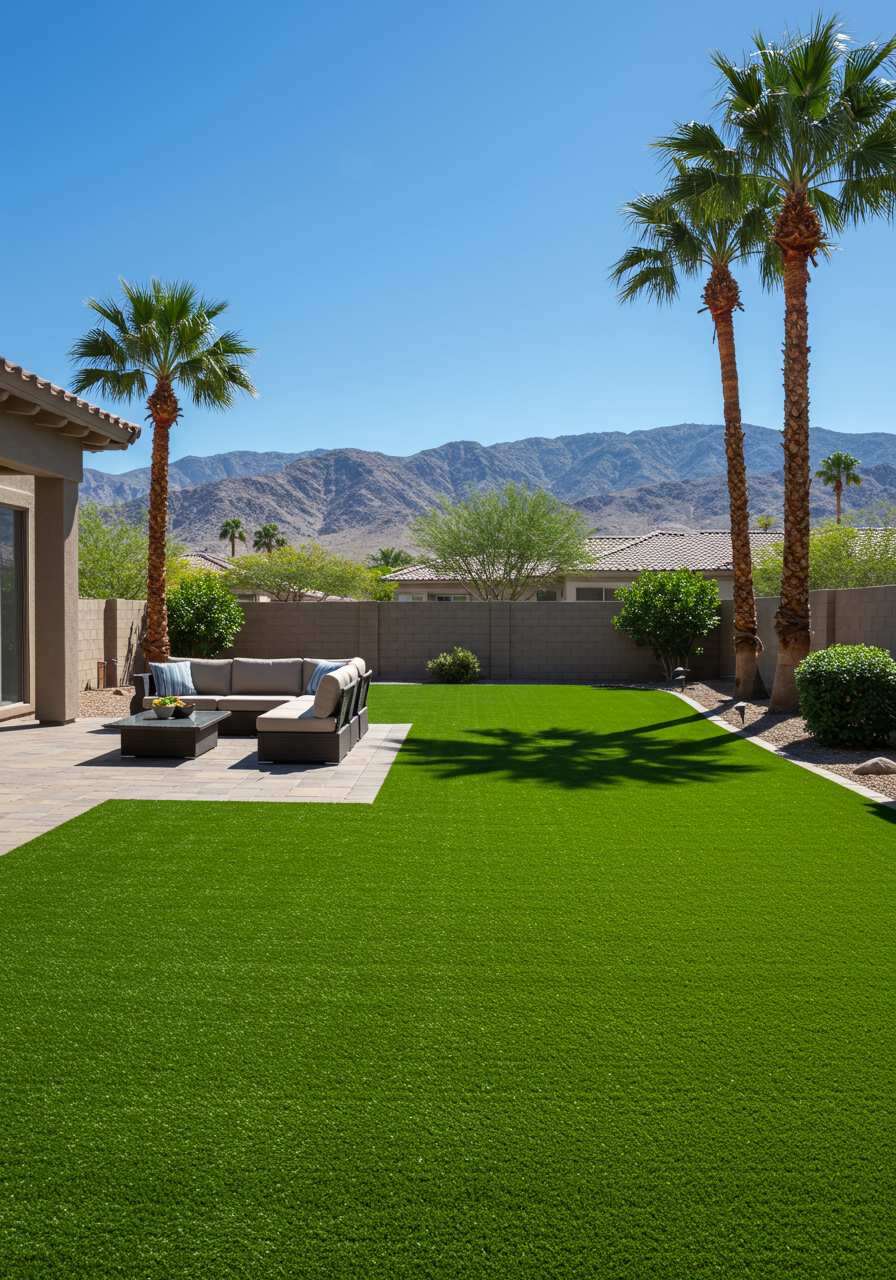

An additional considerable environmental advantage of synthetic grass is its durability and longevity. Unlike all-natural turf, synthetic grass does not need reseeding or replacement as a result of weather adjustments. This durability reduces the sources made use of for the constant maintenance and substitute of all-natural grass.


In regards to air top quality, synthetic lawn provides clear advantages as well. Standard lawns require normal mowing, which launches pollutants into the environment. The U.S Epa keeps in mind that gas-powered lawn mowers contribute substantially to air contamination. With artificial turf, no mowing is needed, removing these discharges totally.


Lastly, artificial turf assists deal with soil disintegration. In locations where the dirt is prone to disintegration, specifically in desert environments like Las Vegas, synthetic grass can give much-needed stability. The backing product on artificial turf assists keep dirt in position, avoiding disintegration and promoting much better environmental health.


In conclusion, the button to artificial turf in Las Vegas uses numerous ecological benefits.

Las Vegas' Top Synthetic Grass Providers: A Comparison - Las Vegas green space upgrades

  1. Las Vegas event turf rentals bring green glam to your special day.
  2. pet friendly turf Las Vegas
  3. Las Vegas event turf rentals bring green glam to your special day.
  4. pet friendly turf Las Vegas
  5. Las Vegas event turf rentals bring green glam to your special day.
  6. pet friendly turf Las Vegas
From water conservation to air top quality renovation, artificial turf proves to be a practical, environmentally friendly remedy, especially in areas coming to grips with water shortage and climate change.

Las Vegas' Top Synthetic Grass Providers: A Comparison - UV protected turf in Las Vegas: because even fake grass deserves sunscreen.

  1. UV protected turf in Las Vegas: because even fake grass deserves sunscreen.
  2. Las Vegas event turf rentals bring green glam to your special day.
  3. pet friendly turf Las Vegas
  4. UV protected turf in Las Vegas: because even fake grass deserves sunscreen.
  5. Las Vegas event turf rentals bring green glam to your special day.
  6. pet friendly turf Las Vegas
As Las Vegas residents remain to look for ways to lessen their ecological impact, the adoption of synthetic grass will likely end up being a significantly prominent choice.

Flexibility and Aesthetic Appeal of Artificial Turf in Las Vegas


Synthetic grass, frequently called artificial turf, has gained enormous appeal in the dry, desert city of Las Vegas. In a city where natural turf is challenging to expand and maintain as a result of water shortage and severe heat, artificial turf offers an attractive and versatile choice.

Las Vegas' Top Synthetic Grass Providers: A Comparison - Las Vegas green space upgrades

  1. artificial turf rooftops Henderson
  2. Las Vegas turf for HOAs
  3. Las Vegas green space upgrades
  4. UV protected turf in Las Vegas: because even fake grass deserves sunscreen.
  5. Las Vegas event turf rentals bring green glam to your special day.
  6. pet friendly turf Las Vegas
The convenience and visual allure of artificial turf are among the leading 10 advantages of using this man-made surface in Las Vegas.


Lets begin by going over the flexibility of artificial turf. Among the key advantages of synthetic grass is that it can be mounted anywhere, no matter the climate or surface. This is especially advantageous in Las Vegas, where the atmosphere is not conducive to the growth of all-natural turf. Artificial turf can be installed on roofs, patio areas, around pool areas, pet runs, sporting activities areas, and playgrounds, among others. It is also a favored selection for fairway and bowling eco-friendlies due to its also, smooth surface area. This versatility suggests you can have a lush, environment-friendly yard all year round, regardless of the weather or water limitations.


Another considerable benefit of artificial turf is its aesthetic charm. Unlike all-natural grass, synthetic grass stays vivid and eco-friendly throughout the year, enhancing the look of your home or service. It offers a clean, nicely polished look that is difficult to accomplish with natural yard, especially in a desert environment. The synthetic grass offered today is designed to look like real grass, making it practically identical from the real point. Furthermore, it does not discolor under sunshine or transform brown during droughts, ensuring your yard looks attractive and welcoming at all times.


In addition, artificial turf can be customized to fit your specific needs. It is offered in various shades, sizes, and appearances, enabling you to create a distinct and personalized outside area. Whether you want a soft, plush grass for your children to use or a resilient, hard-wearing surface area for high-traffic areas, there is an artificial turf item to satisfy your requirements.


To conclude, the flexibility and visual charm of artificial turf make it an outstanding choice for homes and organizations in Las Las vega. Not just does it supply a functional, low-maintenance choice to natural lawn, however it additionally boosts the appearance of your residential or commercial property, making it a lot more appealing and inviting. So, if youre thinking about updating your outside area, artificial turf could be the excellent remedy.

Long life and Durability: Just How Artificial Turf Outlasts Natural Lawn


When it concerns the longevity and durability of lawn, synthetic grass plainly beats its natural counterpart. This is specifically evident in a city like Las Las vega, where the extreme desert climate can damage all-natural yards. In contrast, artificial turf stays lively and rich all the time, regardless of weather conditions.

Las Vegas' Top Synthetic Grass Providers: A Comparison - artificial turf rooftops Henderson

  1. Las Vegas green space upgrades
  2. UV protected turf in Las Vegas: because even fake grass deserves sunscreen.
  3. Las Vegas event turf rentals bring green glam to your special day.
  4. pet friendly turf Las Vegas
  5. Las Vegas green space upgrades
This essay looks for to highlight how artificial turf outlives natural turf, thus making it one of the top advantages of making use of artificial turf in Las Vegas.


All-natural yard requires a great deal of maintenance to maintain it looking fresh and environment-friendly. It requires normal watering, mowing, fertilizing, and re-seeding. Despite all this care, it can still succumb to diseases, pests, and the scorching Las Vegas warmth. The long life of natural lawn is typically endangered by these variables, leading to a worn-out and irregular grass that is neither appealing neither sensible.


On the other hand, artificial turf, additionally referred to as synthetic grass, offers remarkable durability and durability. It is made from premium, sturdy materials that can endure hefty foot web traffic, extreme heat, and other severe problems. This means that it stays undamaged and vibrant for years, calling for little to no maintenance. In fact, many artificial turf is made to last for over a decade, which is considerably longer than what can be anticipated from all-natural turf.


An additional vital aspect that contributes to the durability of artificial turf is its resistance to bugs and conditions. Unlike all-natural grass, synthetic turf does not offer a habitat for insects, neither does it experience common grass illness. This removes the need for pesticides and fungicides, minimizing both upkeep expenses and environmental influence.


In addition, synthetic grass does not need sprinkling to remain environment-friendly. This is a considerable advantage in a desert city like Las Vegas, where water is a valuable resource. By opting for artificial turf, house owners can save on their water costs and contribute to water preservation efforts.


Last but not least, artificial turf can hold up against the damage of sporting activities and other leisure activities much better than natural lawn. It supplies a constant playing surface area that doesn't obtain sloppy or establish divots, making it suitable for sports fields and play grounds.


In conclusion, the longevity and toughness of synthetic grass far surpass that of all-natural lawn, making it a useful and cost-efficient selection for Las Vegas homeowners. Its resistant to harsh weather condition, pests, and illness, and it does not need watering or routine upkeep. Whether for a yard, a sports area, or a public park, artificial turf assures a green and lavish surface area

Synthetic grass is a surface of artificial fibers made to look like all-natural yard, utilized in sports fields, residential yards and industrial applications that generally make use of yard. It is a lot more sturdy than lawn and conveniently maintained without watering or cutting, although regular cleaning is required. Stadiums that are significantly covered and/or at high latitudes commonly make use of artificial turf, as they typically do not have enough sunshine for photosynthesis and substitutes for solar radiation are prohibitively pricey and energy-intensive. Negative aspects include enhanced threat of injury especially when made use of in sports competitors, as well as health and environmental issues concerning the petroleum and hazardous chemicals utilized in its manufacture. Synthetic grass initially acquired substantial attention in 1966, when ChemGrass was installed in the year-old Astrodome, established by Monsanto and rebranded as AstroTurf, now a common hallmark (registered to a new proprietor) for any kind of synthetic grass. The first-generation system of shortpile fibers without infill of the 1960s has greatly been replaced by 2 even more. The 2nd features longer fibers and sand infill and the 3rd adds recycled crumb rubber to the sand. Contrasted to earlier systems, modern synthetic grass much more carefully resembles turf in look and is additionally thought about much safer for sports competitors. However, it is still not widely thought about to be equivalent to lawn. Sports clubs, leagues, unions and individual athletes have frequently spoken up and wared it, while local governments have actually passed and implemented legislations restricting and/or banning its usage.

.

Poly-Turf was a brand of artificial turf in the early 1970s, manufactured by American Biltrite of Wellesley, Massachusetts. It was the first specifically designed for American football, with a patented layered structure which included a "shock pad" between the artificial grass and the asphalt sub-surface.[1] It used polypropylene for its artificial grass blades, rather than the nylon used in AstroTurf and 3M's Tartan Turf.[2][3][4]

History in Miami

[edit]

In the late 1960s, the natural grass surface at the Orange Bowl in Miami was constantly in poor condition,[5] primarily due to heavy usage; 34 games were scheduled there during the 1968 football season.[6]

Poly-Turf was installed at the city-owned stadium in 1970,[7] and utilized for six seasons. The stadium was used for both college and professional football, primarily by the University of Miami Hurricanes and the Miami Dolphins of the NFL. It also hosted the eponymous New Year's Day college bowl game, Super Bowl games, and high school football.

The University of Nebraska Cornhuskers won the first three Orange Bowl games played on Poly-Turf, which included two national championships. The first Super Bowl played on artificial turf was played on Poly-Turf in the Orange Bowl in January 1971, when the Baltimore Colts defeated the Dallas Cowboys 16-13 in Super Bowl V. The next Super Bowl at the stadium was the final game played on Poly-Turf in Miami; Super Bowl X in January 1976.[8] Its flaws received additional media exposure the week prior to the game,[9] and Dolphins receiver Nat Moore documented them in a local article.[10]

The longer polypropylene blades of Poly-Turf tended to mat down[11][12] and become very slick under hot & sunny conditions.[13][14][15] Other NFL owners were skeptical of the brand before the first regular season games were played in 1970.[7] The field was replaced after two seasons,[16][17] before the Dolphins' 1972 undefeated season.[18] It was replaced by another Poly-Turf surface. While it had similar problems,[19][20] it lasted longer than the first installation, and was used for four years. Over just six years, both installations deteriorated rapidly and some football players suffered an increasing number of leg and ankle injuries; some players claimed to trip over seams. Prior to the second installation in 1972, the city did not consult with the Dolphins about the replacement; Dolphins' head coach Don Shula preferred a different brand, either AstroTurf or Tartan Turf.[21] The field discolored from green to blue due to the severe UV nature of the Miami sun.[14][22]

Return to natural grass

[edit]

The city removed the Poly-Turf in 1976 and re-installed natural grass, a special type known as Prescription Athletic Turf (PAT),[23][24][25] which remained until the stadium's closure in early 2008. As late as December 1975, the city had planned to retain the Poly-Turf for the 1976 season,[23] but that decision was changed a few weeks later, prior to the Super Bowl.[8][26][27]

The Orange Bowl became the first major football venue to replace its artificial turf with natural grass, and it was the third NFL stadium to install Prescription Athletic Turf; Denver's Mile High Stadium and Washington's RFK Stadium installed PAT fields a year earlier in the spring of 1975.[24]

Other installations

[edit]

Other NFL stadiums which installed Poly-Turf included Schaefer Stadium, opened in 1971 for the New England Patriots,[11] and Tulane Stadium in New Orleans, home of the Saints, Tulane University, and the Sugar Bowl. Notable college stadiums included Legion Field in Birmingham, Alabama[28] and Alumni Stadium at Boston College.[29]

American Biltrite ceased production of Poly-Turf in 1973; 3M stopped the manufacture of its Tartan Turf in 1974, citing rising oil prices in light of the 1973 oil embargo.[4] This left AstroTurf as the only major manufacturer of artificial turf (with only minor competition along the way) until FieldTurf was introduced in the late 1990s.[30]

References

[edit]
  1. ^ U.S. Patent number 3661687, inventors Arthur F. Spinney and Lawrence J. Warnalis
  2. ^ Underwood, John (November 15, 1971). "New Slant on the Mod Sod". Sports Illustrated. p. 32. Retrieved October 29, 2014.
  3. ^ "Mod-sod revolution felt". Tuscaloosa News. Associated Press. June 30, 1970. p. 8.
  4. ^ a b Johnson, William Oscar (August 12, 1985). "The tyranny of phony fields". Sports Illustrated. p. 34. Retrieved October 29, 2014.
  5. ^ Crittenden, John (October 16, 1968). "Orange Bowl's on the beach". Miami News. p. 1D.
  6. ^ Plaisted, Ed (August 1, 1968). "Orange Bowl grass faces torture test". Miami News. p. 3D.
  7. ^ a b Petrella, Tony (August 30, 1970). "Owners dislike Poly-Turf". Palm Beach Post-Times. p. D4.
  8. ^ a b "It's back to grass for Orange Bowl after Sunday's game". Daytona Beach Morning Journal. Associated Press. January 16, 1976. p. 6B.
  9. ^ "Last-minute repairs". Palm Beach Post-Times. photo. January 17, 1976. p. D1.
  10. ^ Moore, Nat (January 15, 1976). "Dear Sirs". Palm Beach Post. p. D1.
  11. ^ a b "Scorecard: Rug". Sports Illustrated. October 18, 1971. Retrieved October 29, 2014.
  12. ^ "Lazy Miami artificial turf still laying down on job". Eugene Register-Guard. October 20, 1971. p. 3D.
  13. ^ Petrella, Tony (October 5, 1971). "Poly-Turf: a headache". Palm Beach Post. p. D1.
  14. ^ a b Petrella, Tony (October 19, 1971). "Orange Bowl's Poly-Turf: troubles and questions". Palm Beach Post. p. B5.
  15. ^ "Poly-Turf...down or up?". Palm Beach Post. wire services. October 22, 1971. p. H1.
  16. ^ "Biltrite to re-carpet Orange Bowl". Palm Beach Post. January 22, 1972. p. C4.
  17. ^ "Orange Bowl to receive better 'grass'". Palm Beach Daily News. UPI. January 23, 1972. p. 18.
  18. ^ Sun-Sentinel.com – Miami Orange Bowl – 2008
  19. ^ Nobles, Charlie (September 6, 1972). "Slippery turf infuriates Hurricanes". Miami News. p. 1D.
  20. ^ Treglown, Dick (September 26, 1972). "Orange Bowl turf: a slippery subject". Palm Beach Post. p. C1.
  21. ^ "OB Poly-Turf: A mean green". Evening Independent. St. Petersburg, Florida. Associated Press. September 26, 1972. p. 1C.
  22. ^ MiamiSouthpaw.blogspot.com – "Ghosts of Orange Bowl Poly-Turf" – 2009-08
  23. ^ a b "Orange Bowl sticks with Poly-Turf". Miami News. December 20, 1975. p. 2B.
  24. ^ a b Nobles, Charlie (January 28, 1976). "PAT can be used to soften visitors". Miami News. p. 1C.
  25. ^ Nobles, Charlie (July 31, 1976). "Dolphins find fewer bugs without rug as Vikings visit". Miami News. p. 1B.
  26. ^ Nobles, Charlie (February 10, 1976). "Orange Bowl will install grass". Miami News. p. 1C.
  27. ^ "Orange Bowl taking out Poly Turf". Lawrence Journal World. Kansas. February 14, 1976. p. 17.
  28. ^ "Poly-Turf for Legion". The Tuscaloosa News. Associated Press. May 19, 1970. p. 7. Retrieved January 20, 2014.
  29. ^ Reid, Jan (December 1979). "The real mean green". Texas Monthly. p. 153.
  30. ^ "Living with Artificial Grass" American Journal of Sports Medicine vol. 18, no. 4, 1990-07

Crossbreed yard or enhanced natural turf is a product developed by integrating natural yard yard with enhancing artificial fibers. It is used for stadiums and training pitches made use of for association football, rugby, arena football and cricket. Enhanced natural turf can additionally be used for occasions and performances. The synthetic fibers included right into the rootzone make the grass stronger and more immune to damage. A first generation of hybrid grass showed up in the 1990s. Turf origins were enabled to intertwine with a mix of dirt and synthetic fibers as they expanded. Three major techniques exist to insert artificial fibers in the origin zone. The first is to infuse fibres in the sand with a tufting machine. The second method is to blend fibres, cork and sand in a computerized plant and to mount it afterwards on the pitch. The system was produced by a research laboratory at the Arts et Métiers ParisTech. The third technique is to place a carpet or mat with woven or tufted fibers externally, after that to clean in sand or sand blends to maintain the fibers in an upright position and finally to seed turf mixes on top. The natural turf origins through the floor covering and maintains the system. These systems are called carpet-based crossbreed grass solutions.

.

About Rock N Block - Turf N Hardscapes

Driving Directions in


Driving Directions From 36.161101469679, -115.24023784407 to
Driving Directions From 36.204048406654, -115.07060892966 to
Driving Directions From 36.059845804985, -115.11051197402 to
Driving Directions From 36.217321549587, -115.03096451151 to
Driving Directions From 36.179365980183, -115.28172924124 to
Driving Directions From 36.140719909033, -115.13622075405 to
Driving Directions From 36.201297787393, -115.16763237205 to
Driving Directions From 36.034781160289, -115.27339545983 to
Driving Directions From 36.066128369982, -115.2736452018 to
Driving Directions From 36.124641545897, -115.18952369231 to
Driving Directions From 36.123765600262, -115.31049347598 to
Driving Directions From 36.108080542887, -115.29829407827 to
Driving Directions From 36.18728238744, -115.15215232625 to
Driving Directions From 36.095725822184, -115.19702299233 to
Driving Directions From 36.083039086155, -115.04698705795 to
Driving Directions From 36.228462908728, -115.26373302826 to
Driving Directions From 36.233491219118, -115.31233072296 to
Driving Directions From 36.119965600938, -115.04817790431 to
Driving Directions From 36.164916023717, -115.15965924789 to
Driving Directions From 36.042245867959, -115.02695451348 to
Driving Directions From 36.241926641592, -115.34546048619 to
Driving Directions From 36.19937935395, -114.98124591563 to
Driving Directions From 36.042287838954, -115.31268803147 to
Driving Directions From 36.167466952951, -114.96278298368 to